Postok

“mert Benne élünk, mozgunk és vagyunk” (ApCsel 17,28) – Benne vagy? – Nagymarosi Ifjúsági Találkozó

Kedves Fiatalok!

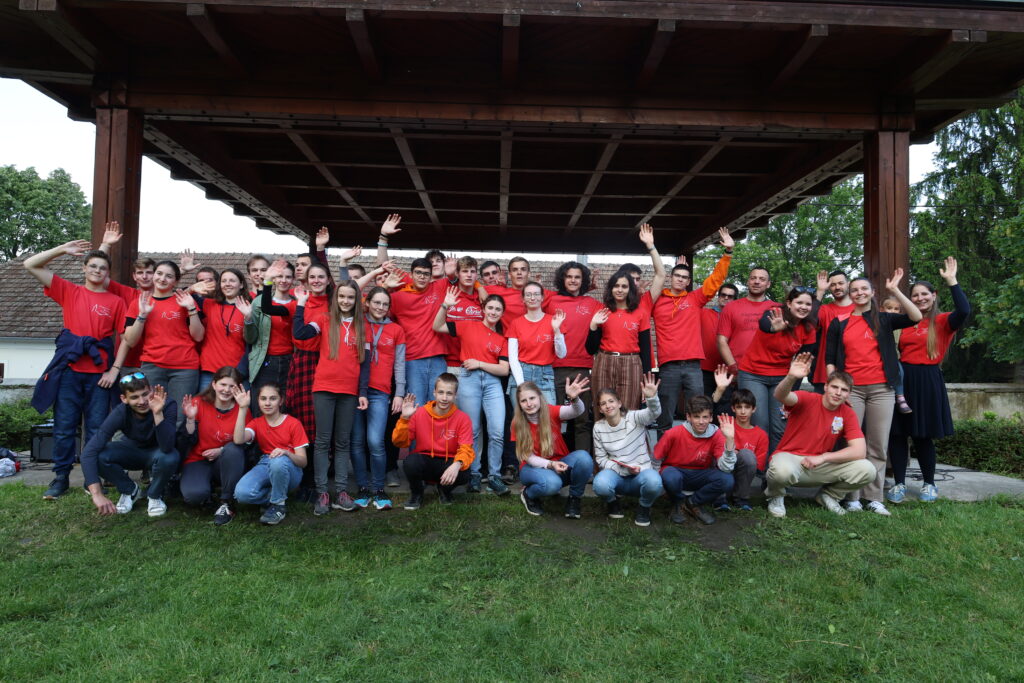
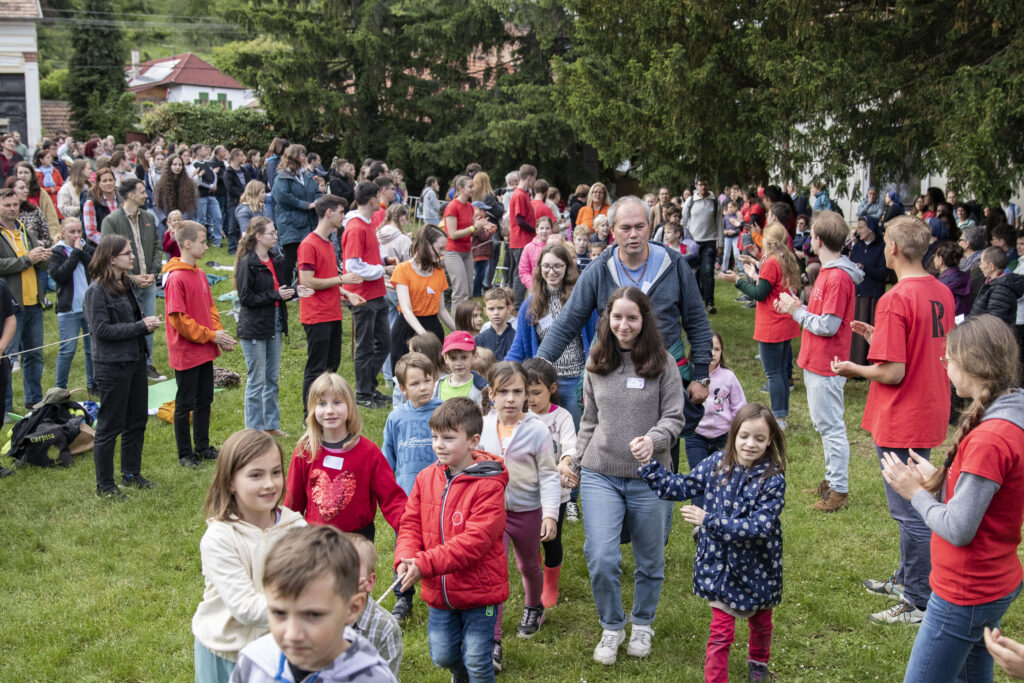
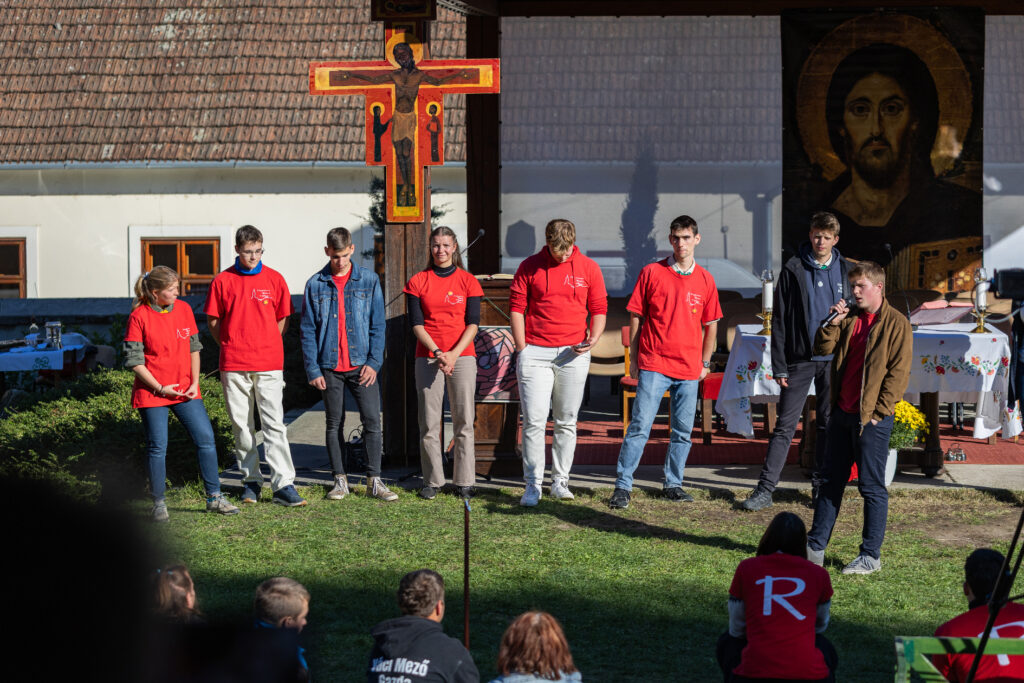
Hatalmas örömmel hívunk és várunk Benneteket az idei tavaszi Találkozóra, 2026 május 16-án! 

Az ide témánk, “mert Benne élünk, mozgunk és vagyunk” (ApCsel 17,28) – És te Benne vagy?

Itt vagyunk a világban és keressük a helyünket benne, közben felmerül bennünk: mi az az alap, amire ráépíthetjük az életünket, és kik vagyunk hívő keresztényként. Mi az ami megtart, hogy megmaradjunk?

A hit nem pusztán gondolat vagy hagyomány, hanem élő kapcsolat Krisztussal, amely erőt, irányt és otthonosságot ad, és életünk központja lehet. Isten nem távoli, hanem jelen van a mindennapokban, döntéseinkben és kapcsolatainkban, így a hit nem korlát, hanem iránytű az életben. 

A legmélyebb igazság rólunk, hogy Isten gyermekei vagyunk, és az Ő jelenlétében, Őbenne, önmagunk lehetünk.

Szeretettel hívunk: gyere el Nagymarosra! Találkozzunk, gondolkodjunk, imádkozzunk együtt, és keressük azt az alapot, amelyre bátran építhetünk. 

Benne vagy?

További fontos információkért kövessétek a facebook és instagram oldalainkat is!

Essential Professional Certifications: BLS, ACLS, NASM, EPA 608 & More


Essential Professional Certifications: BLS, ACLS, NASM, EPA 608 & More


Certification choices shape early career momentum and mid-career pivots. Whether you’re pursuing healthcare credentials like BLS certification, ACLS certification, PALS and NRP, or professional credentials like NASM personal trainer certification, CAPM certification, or EPA 608 certification, understanding scope, renewal, and real-world value matters more than buzz.

This guide explains categories, key differences, preparation tactics, and long-term value—without fluff. Expect concise comparatives, exam and renewal realities, and direct links to resources when relevant. I also include an SEO-friendly semantic core so you can reuse keyword clusters for landing pages or program pages.

Throughout, you’ll see practical advice for voice-search queries (“How long does BLS certification last?”), featured-snippet style short answers, and actionable preparation tips that apply to a broad set of credentials: BLS, ACLS, PALS, RBT, BCBA, NASM, EPA 608, ARRT, CAPM, CDA, HHA, TABC, TIPS, and more.

Certification categories and who needs them

Certifications commonly fall into four buckets: clinical/medical (BLS, ACLS, PALS, NRP), behavioral and allied health (RBT certification, BCBA certification, HHA certification, CDA certification), professional/technical (CAPM certification, ARRT certification, welding certification, EPA certification), and fitness/licensing (NASM certification and NASM personal trainer certification, TABC, TIPS). Identifying which bucket aligns with your job target narrows choices quickly.

Clinical certifications like BLS certification and ACLS certification focus on acute patient care skills and are often employer-mandated for clinicians, EMTs, nurses and respiratory therapists. Behavioral credentials such as RBT or BCBA are required for roles involving applied behavior analysis, where state or payer requirements drive credential value and reimbursement.

Technical and trade certifications (EPA 608 certification, ARRT radiography certifications, welding certification) prove competency for regulated tasks or equipment use. Fitness and service certifications (NASM personal trainer certification, TABC certification, TIPS certification) are frequently consumer-facing and can be earned more quickly, but reputation and continuing education still affect long-term earning potential.

How to compare certifications: scope, cost, renewal, prerequisites

Start by answering these core questions for any credential: What skills does it prove? Who requires it? How long is it valid? What are the renewal and continuing-education requirements? What does the exam entail (hands-on, proctored, online)?

Short answer for voice search: “How long does certification last?”—Most healthcare certifications (BLS, ACLS, PALS) last 2 years; many technical and professional certs range from 1–3 years depending on the issuing body. Always check the issuing organization’s current policy.

  • Key comparison factors: scope of practice, recognized issuing body, cost (course + exam), renewal interval, CEs required, and employer recognition.

Cost and time investment vary widely. A standard American Red Cross or American Heart Association BLS certification course is typically a few hours plus the exam; ACLS courses require more classroom and practical time. High-stakes credentials like ARRT or BCBA include coursework prerequisites and supervised experience hours before eligibility to sit for the exam.

Quick notes on major certifications and practical implications

BLS certification (including American Red Cross BLS certification) is foundational for clinical staff. It’s aimed at basic life support skills: adult/child CPR, AED use, choking. ACLS certification expands to advanced cardiac algorithms, arrhythmia recognition, and team dynamics—often required for clinicians in emergency and critical care. PALS certification focuses on pediatric life support; NRP certification covers neonatal resuscitation.

Behavioral and allied-health distinctions: RBT certification (Registered Behavior Technician) is a paraprofessional credential under BCBA oversight; BCBA certification (Board Certified Behavior Analyst) requires graduate-level coursework and supervised experience. HHA certification (Home Health Aide) and CDA certification (Child Development Associate) are typically state- or employer-based and emphasize hands-on care.

In fitness and business: NASM certification and NASM personal trainer certification are industry-recognized for personal trainers; NASM emphasizes corrective exercise and program design. CAPM certification and SHRM certification are professional paths—CAPM for project fundamentals and SHRM for HR professionals. EPA 608 certification and EPA certification are regulatory for HVAC technicians handling refrigerants (including EPA 608 certification subtypes), while ARRT certification covers radiologic technologists and requires clinical competency and an exam.

Trade and service: Welding certification demonstrates code-level competency for fabrication jobs. TABC certification and TIPS certification are responsible service certifications for alcohol service in certain jurisdictions. TIPs and TABC differ by state rules but both show responsible service awareness.

Regulatory and credential verification: For many of the above, employers verify credentials against issuing organizations. When listing certification on a resume or landing page, include issue date, expiration, and license/cert number when permitted.

For program listings, policy references, or a consolidated resource link, see this repository on structured credential mapping and checklist templates for continuing education: american red cross bls certification and an example landing page for fitness credentials like nasm personal trainer certification.

How to prepare and pass (practical study plan)

Preparation blends focused content review, hands-on practice, and exam simulation. For clinical certifications (BLS, ACLS, PALS, NRP), begin with the current provider manual (AHA or Red Cross) then practice with mannequins or simulation labs. Skills checklists and timed drills improve psychomotor performance under exam conditions.

For knowledge-based and proctored exams (CAPM, SHRM, ARRT), structure study using: syllabus-aligned study guides, question banks, and timed mock exams. Track weak topic areas and review them in 30–45 minute focused sessions. For BCBA or CAPM, supervised experience hours or project-based work are as important as exam prep.

For regulatory or trade certifications (EPA 608, welding, ARRT), hands-on field experience is essential. Study the specific code sections or refrigerant handling rules, practice procedures under supervision, and take practice written and practical tests. Voice-search friendly preparation phrase: “How do I pass EPA 608 certification?” — study the three types (Type I, II, III) relevant to your work and use practice exams from accredited vendors.

Recertification, continuing education, and career impact

Recertification timelines and CE requirements are where many professionals lose credentials. Most healthcare certifications (BLS, ACLS) require renewal every 2 years with a skills component. Clinical certifications may allow online renewal only if accompanied by a hands-on skills check. Professional certs like CAPM or SHRM mandate a number of professional development units or credits.

CE strategy: pick accredited continuing-education providers, track credits in a single digital log, and schedule renewals well before expiration to avoid lapses. Employers often provide courses for mandatory certifications (TABC, TIPS, BLS) — use employer-sponsored trainings when available and keep copies of certificates.

Career impact: adding certifications can increase employability, justify pay bumps, or enable specialty roles (e.g., ACLS -> critical care positions; BCBA -> supervisory roles). Balance credential inflation with real skill gains—choose certifications that align to job descriptions and expected competency rather than certification for its own sake.

FAQ

Q1: What is the difference between BLS, ACLS, and PALS?

A1: BLS (Basic Life Support) covers CPR and AED use for adults, children, and infants. ACLS (Advanced Cardiac Life Support) builds on BLS with advanced arrhythmia management, drug therapy, and team leadership for cardiac events. PALS (Pediatric Advanced Life Support) is ACLS-style content tailored to infants and children. Choose BLS for baseline provider requirements; add ACLS or PALS depending on your clinical specialty.

Q2: How long do common certifications last and how do I renew?

A2: Most healthcare certifications (BLS, ACLS, PALS) last about 2 years; EPA 608 does not always expire but may require updates depending on employer/state rules; CAPM and SHRM have multi-year cycles with PDUs or recertification exams. Renew by completing required continuing education, skills checks, or re-examination through the issuing organization before expiration.

Q3: Which certification should I get first to start a healthcare career?

A3: Start with BLS certification—it’s universally required in healthcare settings. For patient-facing or pediatric roles, add PALS or NRP. If you’re entering behavioral health, begin with RBT (if you meet prerequisites) and plan toward BCBA later. Align your initial certification to job postings in your target setting.

Semantic core (keyword clusters)

Primary keywords:
– bls certification
– american red cross bls certification
– acls certification
– pals certification
– nrp certification
– rbt certification
– bcba certification
– nasm certification
– nasm personal trainer certification
– epa 608 certification
– epa certification

Secondary keywords:
– capm certification
– shrm certification
– arrrt certification
– arrt certification
– cda certification
– hha certification
– welding certification
– tips certification
– tabc certification
– tips certification

Clarifying/LSI and intent-based phrases:
– how long does bls certification last
– bls vs acls vs pals differences
– american red cross bls cost
– epa 608 types type I II III
– nasm exam pass rate
– rbt requirements and supervision hours
– bcba supervised experience
– capm vs pmp differences
– arrrt radiography exam prerequisites
– how to renew certification online
– continuing education units CE credits
– certification renewal checklist
– online bls course vs in-person skills check


2025 Őszi Ifjúsági Találkozó!!! 📢🤩


Kedves Fiatalok és Régebb óta Fiatalok!

Szeretettel hívunk és várunk Benneteket 2025. október 4-én Nagymaroson az őszi találkozón!!! 😇
Fontos témával készülünk… Add tovább a Reményt!🔥 De hogyan?

Jézus előbb magához hív, hogy Vele legyünk, azután elküld, hogy hirdessük Őt. És mindig visszahív, hogy újra feltöltődjünk. A Remény zarándokai vagyunk, úton a mennyei haza felé. Útközben elfáradunk, megéhezünk, megszomjazunk… De ha figyelünk a Szentlélek jelzéseire és egymásra, akkor Isten Országa, amely most még talán csak kicsiny magként van jelen az életünkben, hatalmas fává növekedik bennünk, általunk és közöttünk.

Aki találkozik Jézussal, annak szívében forrás fakad. ⛲
 Szomjazóból forrássá válik.
Szomjas vagy? Velünk tartasz? 🤔

2025osz_ifitalilevel01-1

2025osz_ifitalilevel01-2a

2025osz_ifitalilevel01-3

2025osz_ifitalilevel01-4

Nyomtatható változat

E-commerce Commands & Retail Skills Suite — Catalog, CRO, Pricing


E-commerce Commands & Retail Skills Suite — Catalog, CRO, Pricing


A concise, implementable playbook: product catalogue optimisation, conversion rate optimisation, dynamic pricing strategy, cart abandonment flows, and customer journey analytics.

Overview: what „commands” and a retail skills suite really do

Think of e-commerce commands as the operational grammar of an online store. They are the repeatable instructions — API calls, CLI scripts, automation recipes, and workflow actions — that update catalogues, adjust prices, or trigger customer messages. When you standardise those commands into a coherent retail skills suite, you get predictable outcomes instead of chaotic button-clicking.

For teams focused on scale, the suite becomes a library of intent-based operations: bulk product uploads, attribute normalisation, category mapping, price-rule applications, and cart-recovery triggers. Each command maps to a business capability, which means less tribal knowledge and faster onboarding for new engineers, merchandisers, or marketers.

Operationally, this reduces lead times and error rates. From a product sense, it enables continuous optimisation: run a catalogue reprice command, evaluate conversion lift, and roll forward the winning rules. For practical examples and a starter repository of commands, see the e-commerce commands collection on GitHub.

Product catalogue optimisation and dynamic pricing strategy

Product catalogue optimisation starts with clean data — standardised SKUs, normalized attributes, and clear category hierarchies. Commands that normalise titles, map attributes to canonical taxonomies, and prune duplicates are high-leverage: they improve search relevance and feed accuracy to advertising and recommendation engines.

Dynamic pricing is the application layer on top of catalogue hygiene. Strategy-wise, segment SKUs by elasticity, margin floor, and competitive signals; then apply rules or machine-learned models to adjust price points. A command-driven approach lets you run price experiments (A/B or multi-armed bandit) by tag or cohort with rollback capabilities built-in.

Operational notes: ensure pricing commands respect constraints (min margin, MAP policies), and log every change for audit and attribution. Link price updates to customer-facing content automation so discounts and shipping messages stay consistent across pages and email triggers.

Quick checklist: ensure canonical SKUs, map attributes, tag elasticity cohorts, run controlled price tests, and monitor margin & conversion impact.

Conversion rate optimisation and cart-abandonment email sequences

Conversion rate optimisation (CRO) is both art and instrumentation. Start by instrumenting key touchpoints — product pages, add-to-cart buttons, checkout steps — and measure drop-offs as discrete events. Create micro-hypotheses (e.g., „reduce CTAs per PDP to 1” or „show scarcity tag on variant selection”) and translate them into commands or feature flags for rapid rollout.

Cart abandonment recovery should be a multi-step, personalised flow. A recommended sequence: immediate contextual reminder (1 hour), follow-up with social proof and answers to common objections (24 hours), and a final incentive-based message (48–72 hours). Tie each message to the product catalogue via dynamic content so the email shows correct image, price, and inventory status.

Automate recovery with segmentation: recover high-value carts with SKU-level incentives, run soft-recovery for first-time abandoners, and apply win-back strategies for returning customers. Measure recoveries as both isolated lifts and net impact on LTV — sometimes recovering a cart at a discount lowers long-term margin if it trains customers to wait for coupons.

Customer journey analytics and multi-step e-commerce workflows

Customer journey analytics requires event-level fidelity. Track pageviews, clicks, form interactions, add-to-cart, checkout steps, and post-purchase events. Use path analysis to identify repeating bottlenecks — for example, a third-step payment field that correlates with a 15% drop-off for mobile users — and convert that insight into a targeted command or UI experiment.

Multi-step workflows (checkout funnels, returns, subscription signups) map well to state machines. Model each workflow as stages and commands: transition commands (go-to-payment, apply-coupon, confirm-shipping) and compensating commands (rollback stock, cancel-payment). This reduces edge-case failures and makes observability straightforward.

Analytics should answer: which workflow step has the highest cost per completed conversion, which cohort responds to dynamic pricing, and how message cadence affects time-to-purchase. Build dashboards that surface lift by cohort and enable on-the-fly rule adjustments via the commands library.

Implementation: tools, playbooks, and day-one commands

Start with a minimal toolchain: a source-of-truth product database (PIM), an orchestration layer (workflow engine or job scheduler), an analytics stack (event collector + BI), and an email/CRM system for recovery sequences. Map each tool to a set of atomic commands: import-catalog, normalize-attributes, set-price-rule, trigger-abandon-email, and run-price-test.

Playbooks should be concise: define intent, preconditions, rollback steps, and success metrics. For example, a „price-test” playbook will include the target SKUs, cohorts, duration, metric (net incremental revenue), and the exact commands used to deploy and roll back the test. This reduces ambiguity during cross-functional execution.

For working examples and a starter command repository, explore the open collection of e-commerce commands and retail workflows maintained on GitHub. Use those as templates, adapt parameters to your data model, and instrument every command with standardized logging for observability and analytics.

Semantic core (keywords & clusters)

Primary: e-commerce commands, retail skills suite, product catalogue optimisation, conversion rate optimisation, dynamic pricing strategy, cart abandonment email sequence, customer journey analytics, multi-step ecommerce workflows.

Secondary: product data normalization, pricing rules, elasticity cohorting, checkout funnel optimisation, add-to-cart recovery, abandonment flow automation, A/B price testing, event-level analytics, PIM integration.

Clarifying / LSI & related formulations: catalogue hygiene, SKU canonicalization, price elasticity, conversion lift testing, cart recovery cadence, automated workflow commands, workflow state machine, checkout heatmap, personalised email sequence, retention uplift.

FAQ

What are e-commerce commands and how do they speed up operations?

They are repeatable, scriptable operations (API calls, CLI, or automation recipes) that manipulate product data, prices, inventory, or messaging. Commands reduce manual steps, ensure consistency across the product catalogue, and let teams run controlled experiments rapidly.

How do I reduce cart abandonment with email sequences?

Use a 3-message cadence: an immediate reminder (within 1 hour) that includes the cart snapshot; a follow-up at ~24 hours addressing objections and showing reviews; and a final incentive or urgency message at 48–72 hours. Personalise messages with dynamic product info, stock signals, and customer segmentation to improve recovery.

Which metrics matter for customer journey analytics?

Focus on conversion rate by touchpoint, drop-off rates at each workflow stage, time-to-convert, average order value by cohort, and incremental lift from price or content experiments. Event-level attribution helps you link specific commands or rule changes to outcome shifts.

Suggested micro-markup

Recommended structured data: use Article schema for the page and FAQPage schema for the three questions above (both are included in the head as JSON-LD). For dynamic elements like product snippets, use Product schema with offers and aggregateRating for rich result eligibility.

If you want an executable starter kit: clone the repository and begin with the import-catalog and set-price-rule commands; iterate on small cohorts, measure lift, and commit rules to the retail skills suite. Happy optimising — the cart recovery fairy prefers predictable logic over heroic improvisation.


Gyerekmaros levél

gym_level25T_-1

Minden korosztályt várunk szeretettel a Gyerekmarosra!

A tavaszi Gyerekmaroson arra hívunk mindenkit, hogy egy teljes napon át éljük meg és fogadjuk be a Reményt, Jézus Krisztust. Istenben bízva minden sokkal könnyebbé, reménytelibbé válik! Isten közelségét sok játékkal, imádsággal, jó hangulatban tapasztaljuk meg.

Gyere közénk, éld át ezt Te is! 

Jelentkezés: https://gyerekmaros.hu/regisztracio/

Nagymarosi levél


nm_level25tavasz-1

Milyen Reményre hívtál?

Hogy milyen reményre hívott Isten, csak akkor ismerhetjük fel, ha Ő megvilágosítja lelki szemünket. A Mennyei Atya örvendező és biztos reményre hív.

Hogy mi lesz a következő pillanatban, az bizonytalan, de hogy JÓ, az biztos. Szilárd lehet a reményünk, mert Jézus az alapja.

Készüljünk együtt!